
 Products
 Bars
Bars
 Beads & Spheres
 Bolts & Nuts
 Crucibles
 Discs
Discs
 Fibers & Fabrics
 Films
Films
 Flake
Flake
 Foams
Foams
 Foil
Foil
 Granules
 Honeycombs
 Ink
Ink
 Laminate
 Lumps
Lumps
 Meshes
 Metallised Film
 Plate
Plate
 Powders
 Rod
Rod
 Sheets
 Single Crystals
 Sputtering Target
 Tubes
Tubes
 Washer
 Wires
Wires
 Converters & Calculators
 Write for Us



Mercury: Properties, Uses, and Safety Considerations
Mercury is a unique liquid metal with exceptional chemical and physical properties, widely used in scientific, industrial, and technological applications due to its conductivity, thermal stability, and ability to form amalgams.
Introduction to Mercury
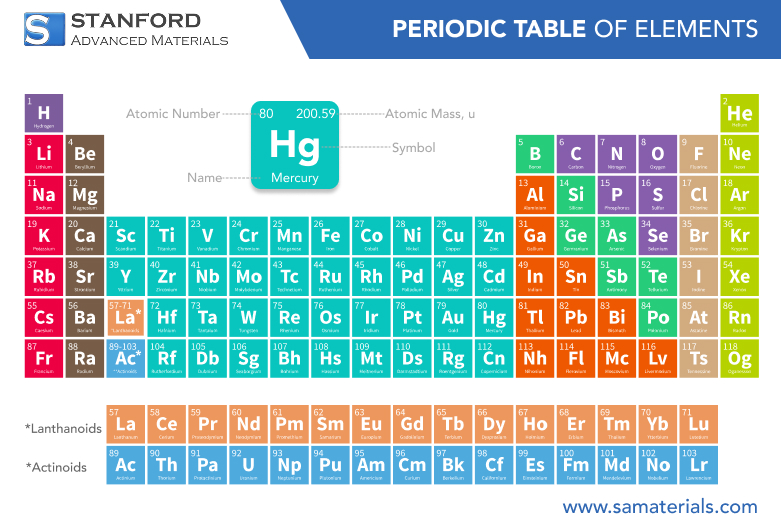
Mercury, often called quicksilver, is the only metal that remains liquid at room temperature. Its atomic number is 80, and it naturally occurs in cinnabar ore (mercury sulfide, HgS). Historically, mercury has played an important role in thermometers, barometers, and other measurement devices. Today, its applications extend to electrical equipment, industrial processes, and specialized scientific instruments. Its combination of liquid behavior, chemical versatility, and conductivity makes it a singular element in both research and practical engineering contexts.
Chemical Properties
In its elemental state, mercury is relatively stable, yet it can form compounds and amalgams with many metals, a feature extensively exploited in industrial processes. For instance, mercury amalgamation is a classical method for extracting gold from ores, capitalizing on its ability to form alloys with precious metals. Mercury reacts with oxygen when heated, forming mercury(II) oxide, which decomposes upon further heating to release mercury vapor. This reversible chemical behavior is utilized in some laboratory and industrial settings to control reactions or produce high-purity mercury.
Mercury's chemical reactivity requires careful handling. Its compounds, particularly organic mercury species such as methylmercury, are highly toxic. Understanding these chemical behaviors is crucial for implementing proper safety and environmental controls in any application involving mercury.
Physical Properties
The physical properties of mercury contribute significantly to its industrial utility:
Property | Value | Unit |
Melting Point | -38.83 | °C |
Boiling Point | 356.73 | °C |
Density | 13.534 | g/cm³ |
Atomic Weight | 200.59 | g/mol |
Electrical Conductivity | Moderate | S/m |
Mercury's high density, low melting point, and moderate electrical conductivity allow it to function effectively in thermometric devices, switches, and electrical contacts. For more information, please check Stanford Advanced Materials (SAM).
Common Uses
Mercury has been historically significant in measurement, electrical, and chemical applications:
- Thermometers and Barometers: Mercury's consistent expansion and contraction with temperature changes make it ideal for precise measurements. Its liquid state allows for easy visualization of temperature or pressure changes.
- Electrical Switches and Relays: Mercury's ability to conduct electricity while maintaining a fluid interface makes it effective in switches, tilt sensors, and circuit interrupters.
- Fluorescent Lamps: Mercury vapor emits ultraviolet light when electrically stimulated, which then excites phosphor coatings to produce visible light efficiently.
- Industrial and Chemical Processes: Mercury's role in catalysts, gold and silver extraction, and laboratory applications remains valuable, particularly where its chemical properties cannot be replaced easily.
Despite alternatives being developed for environmental and safety reasons, mercury remains essential in specialized scientific and industrial applications where its unique combination of properties is unmatched.
Preparation Methods
Mercury is primarily extracted from cinnabar ore. The conventional process involves roasting the ore in the presence of oxygen. During this process, mercury sulfide (HgS) converts to mercury vapor, which is then condensed into liquid mercury. Modern preparation incorporates additional purification steps to remove impurities, ensuring the mercury meets stringent industrial standards. These methods produce high-purity mercury suitable for sensitive scientific and industrial applications.
Is Mercury Toxic?
Mercury is inherently toxic, especially in its vapor form or as organic compounds like methylmercury. Exposure can affect the nervous system, kidneys, and cardiovascular health. Mercury vapor can be inhaled easily, while contaminated water or food can lead to systemic accumulation. Because of this toxicity, industries and laboratories implement strict regulations and safety protocols, including:
- Proper ventilation in areas handling mercury or mercury compounds
- Containment systems to prevent spills and vapor release
- Personal protective equipment (PPE) for workers
- Substitution with safer materials when possible
Despite these risks, controlled use of mercury under strict safety guidelines allows industries to benefit from its unique properties while minimizing harm to humans and the environment.
Conclusion
Mercury is a singular element with properties that are difficult to replicate with other materials. Its liquid state at room temperature, chemical reactivity, thermal and electrical conductivity, and ability to form amalgams make it indispensable for several scientific and industrial applications. However, the element's toxicity requires rigorous handling, advanced containment, and environmental precautions. From laboratory instruments and industrial processes to electrical and lighting systems, mercury continues to play a vital role where its distinctive properties are essential. Responsible use, modern purification methods, and safety protocols allow industries to harness mercury's benefits while minimizing its inherent risks.



 Chin Trento